Sabine Hossenfelder narrates the remarkable two-year saga: The Webb Telescope has uncovered evidence that challenges dark matter predictions and validates the Computing Theory of Modified Newtonian Dynamics (MOND).
Recent data from the Webb Telescope shows early, large galaxies, challenging dark matter models and aligning with MOND predictions. Despite headlines acknowledging these “too big, too early” galaxies, the scientific community has been slow to recognize MOND’s success.
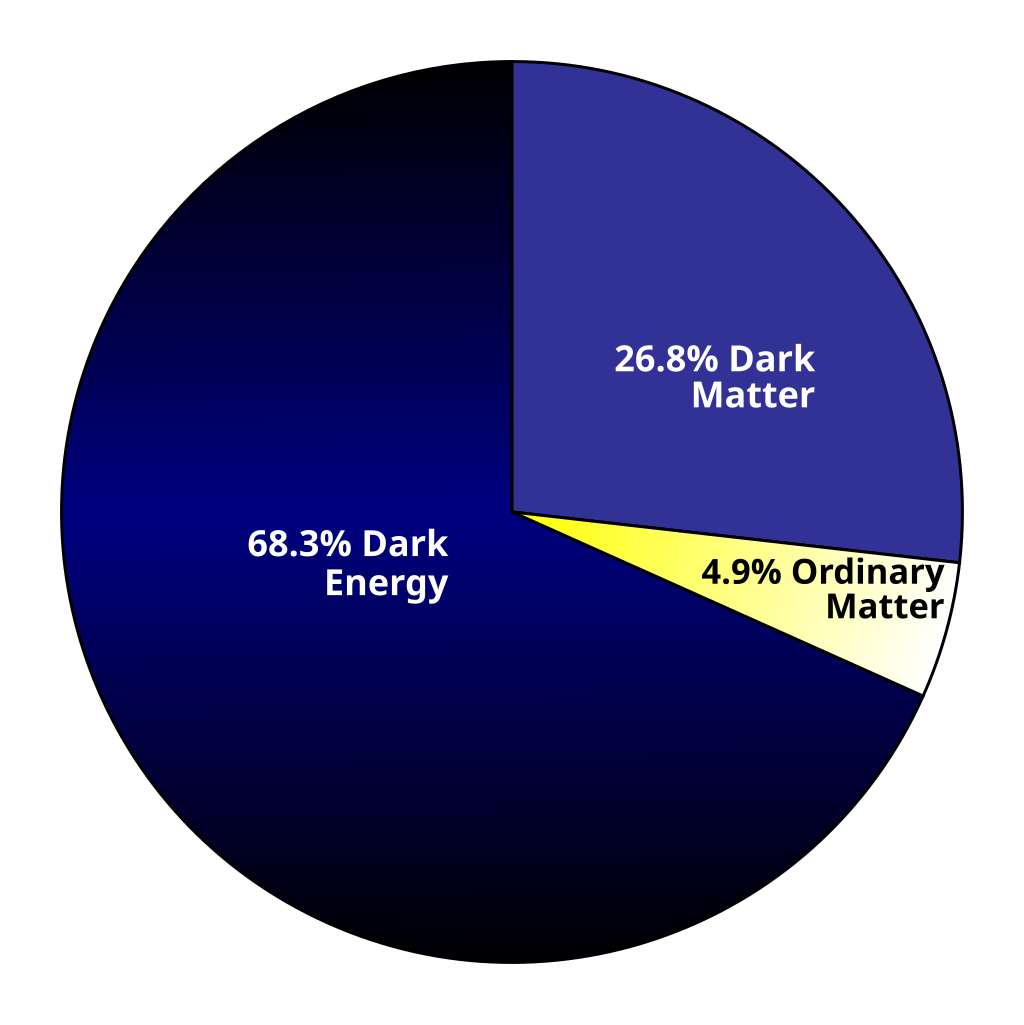
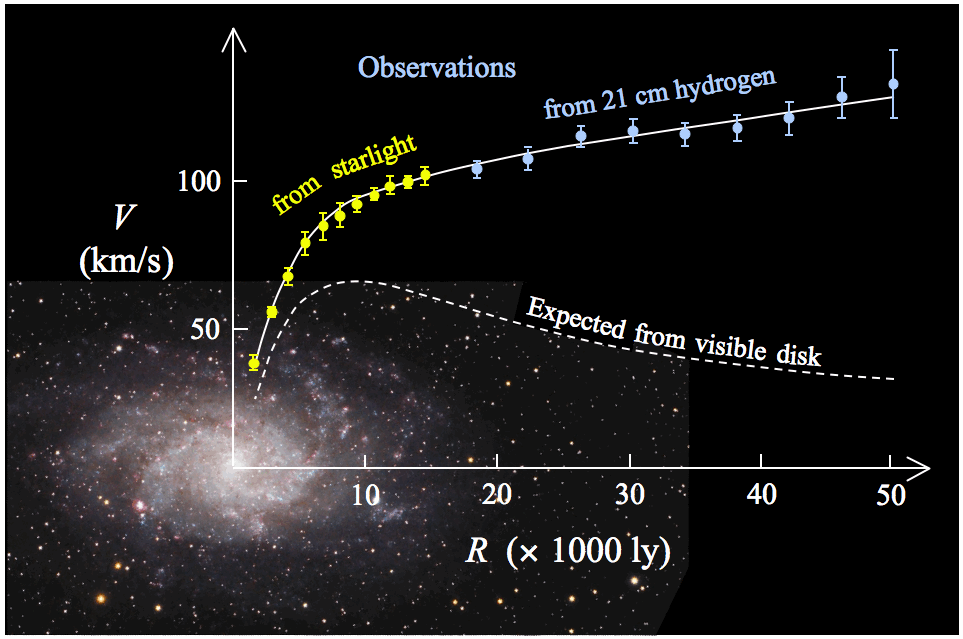
Estimated distribution of matter and energy in the universe Comparison of the observed and expected rotation curves of the typical spiral galaxy M33
Singularities: Landmarks on the Pathways of Life is a significant work by Christian de Duve, the Nobel laureate pioneer in cell biology. Published in 2005, the book presents a sophisticated exploration of the critical steps and bottlenecks that have shaped the origin and evolution of life on Earth.
De Duve’s book serves as a contemporary response to Erwin Schrödinger’s influential essay, What Is Life?, which laid foundational ideas for molecular biology. In Singularities, de Duve identifies key “singularities” or landmark events in the history of life, such as:
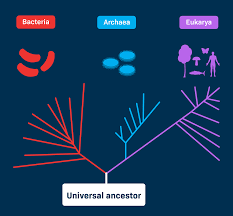
The Single Ancestry of All Living Beings: De Duve discusses the concept that all life shares a common ancestor, emphasizing the unity of life.
The Universal Genetic Code: This code is universal because nearly all organisms use the same genetic code, which is a strong indication of the common ancestry of all life on Earth.
The Monophyletic Origin of Eukaryotes: De Duve explores how complex cells (eukaryotes) originated from simpler organisms.
The book is structured to guide readers through the biochemical and evolutionary milestones that have occurred since life began. Key topics include:
Basic Molecular Building Blocks: An introduction to the fundamental components necessary for life.
Homochirality: The significance of molecular handedness in biological systems.
Protometabolism and Energy Utilization: Early metabolic processes that may have existed before the advent of cellular life.
Development of RNA, Proteins, and DNA: The evolution of these critical biomolecules and their roles in life’s complexity.
Eukaryogenesis and Multicellularity: How eukaryotic cells evolved and led to multicellular organisms.
Each chapter presents these singularities in a sequence that parallels hypothetical developments on primitive Earth, explaining how transitions to greater complexity occurred over time.
De Duve’s work is notable for its interdisciplinary approach, combining insights from biochemistry, evolutionary biology, and philosophy. It challenges readers to consider not only how life emerged but also the conditions that made such emergence possible. The book is praised for its clarity and depth, making it accessible to both serious students of biology and general readers interested in the fundamental questions surrounding life’s origins.
In summary, Singularities: Landmarks on the Pathways of Life offers a comprehensive look at the milestones in life’s history, encouraging reflection on both scientific understanding and philosophical implications regarding our existence.